Islamabad warns “no one beyond reach” after border escalation
Pakistan launches retaliatory strikes on Afghanistan, tensions surge
- By Gurmehar --
- Friday, 27 Feb, 2026
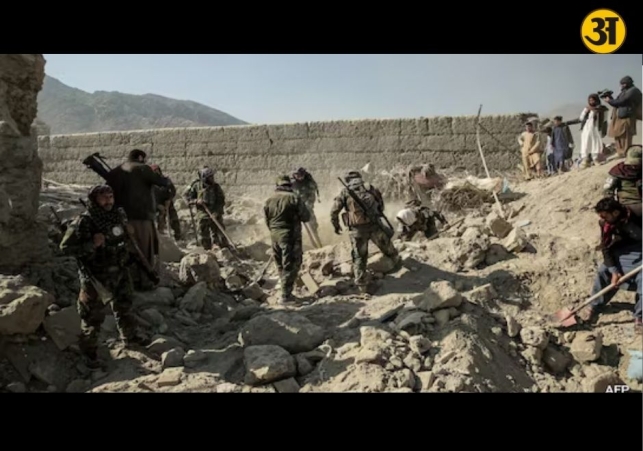
Pakistan and Afghanistan are facing one of their most serious military escalations in recent years after Islamabad confirmed large-scale retaliatory strikes across the border. Pakistani leaders described the action as a strong response to what they called unprovoked firing by Afghan Taliban forces along the frontier.
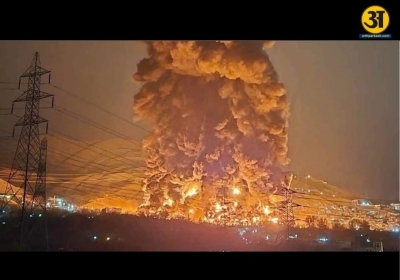
According to Pakistani officials, the strikes were carried out early Friday under Operation “Ghazab lil-Haq.” Authorities in Islamabad claimed the action targeted key Taliban military positions and killed more than 130 fighters. The situation has sharply increased tensions between the two neighboring countries, both of which have repeatedly accused each other of supporting hostile militant groups.
Why the strikes happened
Pakistan said the military action came after cross-border firing on multiple locations in the Khyber Pakhtunkhwa region, including the Chitral, Khyber, Mohmand, Kurram and Bajaur sectors. Officials described the firing as unprovoked and said it forced Pakistan to respond.
President Asif Ali Zardari issued a strong warning, stating that Pakistan would not compromise on its peace or territorial integrity. He said the country’s armed forces had delivered a “comprehensive and decisive” response and warned that anyone mistaking Pakistan’s desire for peace as weakness would face serious consequences.
State broadcaster PTV News reported that Pakistan’s armed forces carried out air strikes on what were described as important Taliban military installations in Kabul, Kandahar and Paktia. Pakistani officials also claimed that an ammunition depot in Afghanistan’s Nangarhar province was destroyed during the operation.
Defence Minister Khawaja Asif confirmed that military operations were underway and described the situation as an “open war.” He said Pakistan had shown patience for a long time but could no longer tolerate what it sees as continued aggression from across the border.
Asif also said that after NATO forces withdrew from Afghanistan, Pakistan had hoped the Taliban government would focus on regional peace and the welfare of Afghan citizens. Instead, he alleged, militant activity targeting Pakistan has increased.
ALSO READ: Pakistan judge’s appointment void after fake degree row
ALSO READ: Union Cabinet approves proposal to rename Kerala as Keralam ahead of assembly polls
Long-running accusations and regional reaction
The latest escalation comes against the backdrop of deep mistrust between Islamabad and Kabul. Pakistan has repeatedly accused the Afghan Taliban of providing safe haven to the Tehrik-i-Taliban Pakistan (TTP), a militant group responsible for many attacks inside Pakistan. Afghan authorities have consistently denied these allegations.
Kabul, on the other hand, has accused Pakistan of hosting and supporting groups that carry out attacks inside Afghanistan and of violating Afghan sovereignty through cross-border operations.
Pakistan has also alleged that India supports anti-Pakistan militant elements operating from Afghan territory. New Delhi has firmly rejected these claims, calling them baseless and politically motivated. Indian officials have repeatedly said Pakistan often blames external actors for its internal security problems.
Earlier, India strongly condemned Pakistan’s air strikes on Afghan territory that reportedly caused civilian casualties, including women and children, during the holy month of Ramadan. India’s Ministry of External Affairs said the strikes were another attempt by Pakistan to externalize its internal failures.
New Delhi also reiterated its support for Afghanistan’s sovereignty, territorial integrity and independence.
Security analysts say the current escalation is particularly worrying because relations between Pakistan and the Taliban-led Afghan government have been steadily deteriorating over the past two years. Border clashes, militant attacks and diplomatic tensions have all increased during this period.
The Pakistan-Afghanistan border, especially the Durand Line region, has long been volatile. Both sides maintain heavy military deployments, and even small incidents can quickly spiral into larger confrontations. The latest strikes and the strong language used by Pakistani leaders suggest the situation may remain tense in the coming weeks.
So far, there has been no clear indication of de-escalation efforts from either side. Regional observers warn that continued military exchanges could destabilize an already fragile security environment in the region.
Despite the sharp rhetoric, some experts believe both countries may still try to avoid a full-scale prolonged conflict because of economic pressures and internal security challenges. However, the current atmosphere of mistrust and repeated cross-border incidents makes the situation highly unpredictable.
For now, the border remains on high alert, with both militaries closely watching each other’s movements. The coming days will be crucial in determining whether the confrontation cools down through diplomacy or moves toward further escalation.
Related News